Showing posts with label '50. Show all posts

Friday, April 8, 2011

Champion Jack Dupree - Blues from the Gutter - 1958 - REUPLOADED!


Review:

The 1958 masterwork album of Champion Jack Dupree's long and prolific career. Cut in New York (in stereo!) with a blasting band that included saxist Pete Brown and guitarist Larry Dale, the Jerry Wexler-produced Atlantic collection provides eloquent testimony to Dupree's eternal place in the New Orleans blues and barrelhouse firmament. There's some decidedly down-in-the-alley subject matter -- "Can't Kick the Habit," "T.B. Blues," a revival of "Junker's Blues" -- along with the stomping "Nasty Boogie" and treatments of the ancient themes "Stack-O-Lee" and "Frankie & Johnny."

Password and Link:
rukusjuice
FLAC - 725 Mb.
24 bit, 96 kHz Vinyl Rip.
http://www.filefactory.com/file/5hy4rdxnypfv/cjdbftg_rar

Sunday, April 3, 2011

Jimmy Liggins and His Drops of Joy - Recorded Between 1947 and 1953, Released in 1978.


Review:

The music of Jimmy Liggins differs greatly from his elder brother Joe's in many respects. Whereas Joe was a more schooled musician, Jimmy was harder, brasher and altogether from the rougher and cruder side of the street. This 25-track collection brings together all the notable tracks Jimmy recorded for Art Rupe's Specialty label between 1947 and 1954. The music Liggins made during his stay at the label produced several R&B hits, most notably the jump-blues perennial "Drunk" (complete with crudely overdubbed lead vocal) and the proto-rock & roll classic "Cadillac Boogie," which in turn provided the basis for Jackie Brenston's "Rocket 88."

Password and Link:
mississippimoan
mp3 128 kbps - 55 Mb
http://www.filefactory.com/file/b309ae3/n/jljlahdoj_rar

Friday, April 1, 2011

Arbee Stidham - The Complete Recordings Vols 1 and 2 - 2004.


Arbee's Bio:


An exciting and expressive jazz-influenced blues vocalist, Arbee Stidham also plays alto sax, guitar and harmonica. His father Luddie Stidham worked in Jimme Lunceford's orchestra, while his uncle was a leader of the Memphis Jug Band. Stidham formed the Southern Syncopators and played various clubs in his native Arkansas in the '30s. He appeared on Little Rock radio station KARK and his band backed Bessie Smith on a Southern tour in 1930 and 1931. Stidham frequently performed in Little Rock and Memphis until he moved to Chicago in the '40s. Stidham recorded with Lucky Millinder's Orchestra for Victor in the '40s for Victor. He did his own sessions for Victor, Sittin' In, Checker, Abco, Prestige/Bluesville, Mainstream, and Folkways in the '50s and '60s, and appeared in the film The Bluesman in 1973. Stidham also made many festival and club appearances nationwide and internationally. He did occasional blues lectures at Cleveland State University in the '70s. 

Password and Links:
mississippimoan
FLAC - 361 Mb

http://www.filefactory.com/file/b30ac06/n/ascrvol1and2_part1_rar
http://www.filefactory.com/file/b30ae5h/n/ascrvol1and2_part2_rar
http://www.filefactory.com/file/b30af9f/n/ascrvol1and2_part3_rar

Howlin' Wolf - Howlin' Wolf Rides Again - Recorded Between 1951 and 1952 , Released in 1993.


Review:

While both Bear Family sets deal with a largely unissued wealth of material, this collection is devoted in the main to all the Memphis recordings from 1951 and 1952 that saw the light of day on a number of Los Angeles-based labels owned by the Bihari Brothers, being issued and reissued and reissued again on a plethora of $1.98 budget albums. Featuring recordings done in Sam Phillips' Memphis Recording Service and surreptitious sessions recorded by a young Ike Turner in makeshift studios, these 18 sides are the missing piece of the puzzle in absorbing Wolf's early pre-Chess period. It also helps that this just happens to be some of the nastiest sounding blues ever recorded. With no tracks being duplicated from the two Bear Family Memphis Days volumes, and sonics far surpassing all previous issues of this material (every last one of them horribly marred by an annoying 60 cycle hum), this is an essential part of any Wolf collection. Alternate-take freaks will revel in the inclusion of two extra takes of "Riding in the Moonlight" from an earlier and different session than the issued version also included. While not quite as essential as his first two Chess albums (and if you were making a judgement call on just passionate performances alone, even that would be debatable), this is definitely the next stop along the way in absorbing the raw genius of Howlin' Wolf.

Password and Link:
mississippimoan
mp3 128 kbps - 46 Mb
http://www.filefactory.com/file/b30d28f/n/hwra.rar

Floyd Dixon - Marshall Texas Is My Home - 1991.


Review:

Floyd Dixon landed at Art Rupe's Specialty label in 1953, his music jumping harder than ever. These 22 tracks rate with his best; the collection is full of rarities and previously unissued items, many featuring the wailing tenor sax of Carlos Bermudez in lusty support of the pianist. By 1957, when he momentarily paused at Ebb Records, Dixon could do a pretty fair breathless imitation of Little Richard, as the scorching "Oooh Little Girl" definitively proves. Also includes Dixon's best-known number, the often-covered rocker "Hey Bartender" (first out on Atlantic's Cat subsidiary in 1954).

Password and Link:
mississippimoan
mp3 128 kbps - 49 Mb
http://www.filefactory.com/file/b3104d4/n/fd_rar

Earl Hooker - Blues Guitar: The Chief and Age sessions 1959- 1963.


Review:

Widespread respect for Earl Hooker, one of the unsung giants of the blues, is long overdue, and his rather limited available discography belies a great original talent. P-Vine Japan has attempted to put this right with , an intelligent and authoritative collection of Hooker's early-'60s heyday, containing instrumental classics such as "Blue Guitar" and " Blues in D Natural." Both sound quality and packaging supersede all previous reissues of this work and, as such, this release becomes perhaps the cornerstone of any Earl Hooker collection.

Password and Link:
mississippimoan
mp3 320 kbps - 158 Mb
http://www.filefactory.com/file/b310e8e/n/ehbgtcandas_rar

Howlin' Wolf - The Complete Recordings - 1951, 1969 - 7 cd Box Set.


Howlin' Wolf Biography:

In the history of the blues, there has never been anyone quite like the Howlin' Wolf. Six foot three and close to 300 pounds in his salad days, the Wolf was the primal force of the music spun out to its ultimate conclusion. A Robert Johnson may have possessed more lyrical insight, a Muddy Waters more dignity, and a B.B. King certainly more technical expertise, but no one could match him for the singular ability to rock the house down to the foundation while simultaneously scaring its patrons out of its wits.

He was born in West Point, MS, and named after the 21st President of the United States (Chester Arthur). His father was a farmer and Wolf took to it as well until his 18th birthday, when a chance meeting with Delta blues legend Charley Patton changed his life forever. Though he never came close to learning the subtleties of Patton's complex guitar technique, two of the major components of Wolf's style (Patton's inimitable growl of a voice and his propensity for entertaining) were learned first hand from the Delta blues master. The main source of Wolf's hard-driving, rhythmic style on harmonica came when Aleck "Rice" Miller (Sonny Boy Williamson) married his half-sister Mary and taught him the rudiments of the instrument. He first started playing in the early '30s as a strict Patton imitator, while others recall him at decade's end rocking the juke joints with a neck-rack harmonica and one of the first electric guitars anyone had ever seen. After a four-year stretch in the Army, he settled down as a farmer and weekend player in West Memphis, AR, and it was here that Wolf's career in music began in earnest.

By 1948, he had established himself within the community as a radio personality. As a means of advertising his own local appearances, Wolf had a 15-minute radio show on KWEM in West Memphis, interspersing his down-home blues with farm reports and like-minded advertising that he sold himself. But a change in Wolf's sound that would alter everything that came after was soon in coming because when listeners tuned in for Wolf's show, the sound was up-to-the-minute electric. Wolf had put his first band together, featuring the explosive guitar work of Willie Johnson, whose aggressive style not only perfectly suited Wolf's sound but aurally extended and amplified the violence and nastiness of it as well. In any discussion of Wolf's early success both live, over the airwaves, and on record, the importance of Willie Johnson cannot be overestimated.

Wolf finally started recording in 1951, when he caught the ear of Sam Phillips, who first heard him on his morning radio show. The music Wolf made in the Memphis Recording Service studio was full of passion and zest and Phillips simultaneously leased the results to the Bihari Brothers in Los Angeles and Leonard Chess in Chicago. Suddenly, Howlin' Wolf had two hits at the same time on the R&B charts with two record companies claiming to have him exclusively under contract. Chess finally won him over and as Wolf would proudly relate years later, "I had a 4,000 dollar car and 3,900 dollars in my pocket. I'm the onliest one drove out of the South like a gentleman." It was the winter of 1953 and Chicago would be his new home.

When Wolf entered the Chess studios the next year, the violent aggression of the Memphis sides was being replaced with a Chicago backbeat and, with very little fanfare, a new member in the band. Hubert Sumlin proved himself to be the Wolf's longest-running musical associate. He first appears as a rhythm guitarist on a 1954 session, and within a few years' time his style had fully matured to take over the role of lead guitarist in the band by early 1958. In what can only be described as an "angular attack," Sumlin played almost no chords behind Wolf, sometimes soloing right through his vocals, featuring wild skitterings up and down the fingerboard and biting single notes. If Willie Johnson was Wolf's second voice in his early recording career, then Hubert Sumlin would pick up the gauntlet and run with it right to the end of the howler's life.

By 1956, Wolf was in the R&B charts again, racking up hits with "Evil" and "Smokestack Lightnin'." He remained a top attraction both on the Chicago circuit and on the road. His records, while seldom showing up on the national charts, were still selling in decent numbers down South. But by 1960, Wolf was teamed up with Chess staff writer Willie Dixon, and for the next five years he would record almost nothing but songs written by Dixon. The magic combination of Wolf's voice, Sumlin's guitar, and Dixon's tunes sold a lot of records and brought the 50-year-old bluesman roaring into the next decade with a considerable flourish. The mid-'60s saw him touring Europe regularly with "Smokestack Lightnin'" becoming a hit in England some eight years after its American release. Certainly any list of Wolf's greatest sides would have to include "I Ain't Superstitious," "The Red Rooster," "Shake for Me," "Back Door Man," "Spoonful," and "Wang Dang Doodle," Dixon compositions all. While almost all of them would eventually become Chicago blues standards, their greatest cache occurred when rock bands the world over started mining the Chess catalog for all it was worth. One of these bands was the Rolling Stones, whose cover of "The Red Rooster" became a number-one record in England. At the height of the British Invasion, the Stones came to America in 1965 for an appearance on ABC-TV's rock music show, Shindig. Their main stipulation for appearing on the program was that Howlin' Wolf would be their special guest. With the Stones sitting worshipfully at his feet, the Wolf performed a storming version of "How Many More Years," being seen on his network-TV debut by an audience of a few million. Wolf never forgot the respect the Stones paid him, and he spoke of them highly right up to his final days.

Dixon and Wolf parted company by 1964 and Wolf was back in the studio doing his own songs. One of the classics to emerge from this period was "Killing Floor," featuring a modern backbeat and a incredibly catchy guitar riff from Sumlin. Catchy enough for Led Zeppelin to appropriate it for one of their early albums, cheerfully crediting it to themselves in much the same manner as they had done with numerous other blues standards. By the end of the decade, Wolf's material was being recorded by artists including the Doors, the Electric Flag, the Blues Project, Cream, and Jeff Beck. The result of all these covers brought Wolf the belated acclaim of a young, white audience. Chess' response to this was to bring him into the studio for a "psychedelic" album, truly the most dreadful of his career. His last big payday came when Chess sent him over to England in 1970 to capitalize on the then-current trend of London Session albums, recording with Eric Clapton on lead guitar and other British superstars. Wolf's health was not the best, but the session was miles above the earlier, ill-advised attempt to update Wolf's sound for a younger audience.

As the '70s moved on, the end of the trail started coming closer. By now Wolf was a very sick man; he had survived numerous heart attacks and was suffering kidney damage from an automobile accident that sent him flying through the car's windshield. His bandleader Eddie Shaw firmly rationed Wolf to a meager half-dozen songs per set. Occasionally some of the old fire would come blazing forth from some untapped wellspring, and his final live and studio recordings show that he could still tear the house apart when the spirit moved him. He entered the Veterans Administration Hospital in 1976 to be operated on, but never survived it, finally passing away on January 10th of that year.

But his passing did not go unrecognized. A life-size statue of him was erected shortly after in a Chicago park. Eddie Shaw kept his memory and music alive by keeping his band, the Wolf Gang, together for several years afterward. A child-education center in Chicago was named in his honor and in 1980 he was elected to the Blues Foundation Hall of Fame. In 1991, he was inducted into the Rock and Roll Hall of Fame. A couple of years later, his face was on a United States postage stamp. Live performance footage of him exists in the CD-ROM computer format. Howlin' Wolf is now a permanent part of American history.

Password and Links:
mississippimoan
FLAC 
http://www.filefactory.com/file/b310c8b/n/hwtcr1.rar
http://www.filefactory.com/file/b311197/n/hw2_rar
http://www.filefactory.com/file/b311688/n/hwtcr3_rar
http://www.filefactory.com/file/b311b64/n/hwtcr4_rar
http://www.filefactory.com/file/b311hde/n/hwcr5_rar
http://www.filefactory.com/file/b3125h3/n/hwtcr6_rar
http://www.filefactory.com/file/b312bdh/n/hwtcr7_rar

Hop Wilson and His Buddies - Steel Guitar Flash - 1988.


Review:

Although the majority of the recordings collected here already show up on Bullseye Blues' 1993 reissue Houston Ghetto Blues, this is the one to get. The main reason for this is the inclusion of all the known extant tracks cut in the '50s for the Lake Charles, LA, Goldband label, where Wilson's versions of "Chicken Stuff" and "Rockin' in the Coconut Top" became tri-state biggies, giving him his 15 seconds of fame and influencing the likes of a young Johnny Winter and other young Texan slide-slingers in the process. With his drummer/sometimes-vocalist King Ivory Lee Semien banging the daylights out of a set that sounds like Salvation Army rejects (check out the floor-tom intro on the Goldband version of "Rockin' in the Coconut Top"), a string bass played by the ubiquitous "Ice Water" Jones, and a crackling, wires sticking out of it steel guitar going to places Elmore James could only think of after watching a bad sci-fi movie, Hop Wilson's dour singing delivery combined with his wild-ass playing becomes a whole genre of blues in and of itself and one well worth investigating. With a full generous 29 tracks aboard (including Wilson and the boys backing up Fenton Robinson and Larry Davis on newly discovered cuts) covering all the Goldband, Trey, and Ivory takes known to exist, this is now the definitive Hop Wilson collection and reason enough to start haunting the blues import bins to track it down. Programming tip: For full frontal assault, program up tracks 13 and 25-29 first and prepare yourself for something really special. There was only one Hop Wilson and here's where you check in to get his message.

Password and Link:
mississippimoan
mp3 160 kbps - 84 Mb
http://www.filefactory.com/file/b3cfbf8/n/hwsgf_rar

Junior Parker, James Cotton and Pat Hare - Mistery Train Recorded Between 1952 and 1954, Released in 1990.


Review:


This excellent little compilation features at least one extant take of everything Junior and his original band, the Blue Flames, recorded at Sun Records between 1952 to 1954. His debut single for the label and his first hit, the classic "Feelin' Good" is aboard as well as the equally fine (but originally unissued) "Feelin' Bad." His leanings toward smoother Roy Brown stylings are evident with tracks like "Fussing and Fighting Blues" and "Sitting and Thinking," but the follow-up to his first Sun single, the original version of "Mystery Train" and two takes of the flip side, "Love My Baby," are the must-hears on this collection. Fleshing out Parker's meager output for Sun are essential early tracks from James Cotton. Cotton doesn't blow harp on any of these, but the sax-dominated "My Baby," and especially "Cotton Crop Blues" and "Hold Me in Your Arms" with Pat Hare on super distorted blistering guitar are Memphis-'50s blues at its apex. Hare himself also rounds out the compilation with two tracks, the prophetic "I'm Gonna Murder My Baby" (Hare did exactly that and spent the rest of his life behind bars as a result) and the previously unissued "Bonus Pay." Don't let the short running time of this CD stop you from picking this one up; the music is beyond excellent.

Password and Link:
mississippimoan
mp3 256 kbps - 65 Mb
http://www.filefactory.com/file/b31659e/n/jpjcphmt_rar

Tarheel Slim - The Red Robin and Fifer Years - 1990.


Review:
Slim was quite an eclectic soul during his 1950s tenure with Bobby Robinson's Red Robin and Fire imprints (as this set conclusively shows). New York blues, pop/R&B duets with Little Ann, even blistering rockabilly-tinged outings ("Number 9 Train," and "Wildcat Tamer") were all well within the versatile guitarist's stylistic scope.

Password and Link:
mississippimoan
mp 3 96 kbps - 35 Mb
http://www.filefactory.com/file/b318521/n/tstrrandfy_rar

Johnny Ace - Memorial Album - 1955.


Review:

In the weeks and months following Johnny Ace's [aka John Marshall Alexander Jr.] tragic passing on Christmas Eve 1954, demand for his songs was at an all-time high. The resulting Memorial Album (1955) gathered a baker's dozen of Ace's most memorable selections, documented between the spring of 1952 and the summer of 1954. There are no unissued numbers on the disc, as each of the tracks had previously surfaced on a variety of 78s. However concurrent audiences no doubt saw this as an opportunity to obtain any of the platters they may have previously missed. Moreover, the exclusion of the prominent Top Ten R&B singles "Cross My Heart" and "Saving My Love for You" suggests Memorial Album was not conceived as a sort of comprehensive anthology. Ace (piano) originally formed his Beal Streeters along with fellow ex-B.B. King sidemen Earl Forest (drums) and Adolph "Billy" Duncan (sax). Their inaugural outing was held in the studios of Memphis radio station WDIA and producing, among other things "My Song," a deviation of Ruth Brown's "So Long." It shot to number one and was backed with the rabble rousin' R&B thumper "Follow the Rule." Listening to Ace's emphatic keyboards makes it clear that in addition to being a consummate composer and vocalist, he was likewise one helluva boogie-style pianist. Three of the four cuts from their next date are also included, specifically worthy of note are the loose and limber instrumentals "Aces Wild" and "Burley Cutie," while the languid ballad "Angel" is akin to Ace and company's standard fare. Beginning in January '53, Ace began working with the Johnny Otis Band. The results speak for themselves, especially "The Clock"'s foreboding temperament and Ace's decidedly impetuous side, displayed as he is flanked by Big Mama Thornton (vocals) for "Yes Baby." "Please Forgive Me" and Ace's biggest crossover entry "Pledging My Love" followed in rather quick succession and not surprisingly both became huge R&B hits as well. Johnny Board (sax), the leader of Ace's touring ensemble, became the musical director for his final batch of tunes. The urban jazz vibe of "Never Let Me Go" and the mid-tempo blues "No Money" are taken from those sessions. Although Memorial Album is out of print, interested parties are encouraged to treat themselves to the Complete Duke Recordings (2005) from the internet audio boutique Hip-O Select -- online at www.hip-oselect.com -- as it houses all 20 of Johnny Ace's seminal contributions to pop music.

Password and Link:
mississippimoan
mp3 192 kbps - 70 Mb
http://www.filefactory.com/file/b318fff/n/jama_rar

Little Milton - The Sun Masters - 1990.


Review:

While he was at Sun, Little Milton tried a variety of different sounds and styles -- sounding like everybody from Elmore James and B.B. King to Fats Domino -- which was all tied together by his raw, manic lead guitar. The Sun Masters collects many of Milton's absolute finest moments -- he never again sounded quite as wild or reckless, either vocally or instrumentally, as he did here.

Password and Link:
mississippimoan
mp3 160 kbps - 40 Mb
http://www.filefactory.com/file/b31c677/n/lmsm1990_rar

Thursday, March 31, 2011

Joe Hill Louis - Boogie In The Park - Recorded Between 1950 and 1953, Released in 2000.


Review:

Everything that Joe Hill Louis recorded for Modern and Meteor in the early '50s is on this 28-track compilation. That includes singles, scattered cuts that would first show up on numerous anthologies on different labels years after they were recorded, and a previously unissued alternate take of "At the Woodchopper's Ball (Jack Pot)." Virtually all of Louis' Sam Phillips-produced sides are here, and there's even an extensive interview with Phillips in the liner notes. Most of the Phillips material is one-man blues, stuff that in its way reflects the transition from country blues to electric blues and rock & roll. Perhaps it's heretical to say so, but some of this might have been better served by a full band. Louis was a sturdy, engagingly good-natured singer and decent electric guitarist and harmonica player, capable of dishing out some good instrumental boogies once in a while as well. But the rhythm, supplied by hi-hat and bass drum, is perfunctory in both its texture and power. In fact, one of the Phillips-overseen songs (Sonny Boy Williamson's "Eyesight to the Blind") does add piano and drums, and some of the 1953 Meteor tracks got bass and drum overdubs. At any rate, it's decent early electric Memphis blues and the one-man multi-instrumentalist approach does set it off from the pack a bit, although the songs are more limited in musical range and adventurousness than those of the best Memphis bluesmen who followed in the next few years.

Password and Link:
mississippimoan
mp3 320 kbps - 168 Mb
http://www.filefactory.com/file/b31d71g/n/jhlbitp.rar

Big Maybelle - The Complete Okeh Sessions 1952 , 1955 - 1994.


Review:

This collection features Big Maybelle's entire OKeh output -- 26 tracks -- including her three R&B chart items, "Whole Lotta Shakin' Goin' On," and the risqué slow blues "I'm Gettin' 'Long Alright." "Gabbin' Blues," her 1952 OKeh debut smash, is a humorous dialogue between Maybelle and gossiping rival Rose Marie McCoy, the tune's co-writer. Maybelle was no mere copyist; her sandpapery vocals stood in sharp contrast to the many interchangeable thrushes then populating the R&B world. New York session wizards such as tenor saxophonist Sam "The Man" Taylor and guitarist Mickey Baker provide great support throughout.

Password and Link:
mississippimoan
mp3 256 kbps - 131 Mb
http://www.filefactory.com/file/b3262cg/n/bmtcos_rar

Wednesday, March 30, 2011

Bo Diddley - The Chess Years (12 cd Box Set) - 1993.


Review:

Charly Records' The Chess Years has assembled most -- though not quite all -- of the music that the Originator recorded for Chess Records, which, unfortunately, means a lot of his lesser work as well -- 282 recordings, made between 1955 and 1974, on 12 CDs; looking at it is like staring across the Grand Canyon, except you want to jump into this if you have any sense. If the collection seems like overkill, that's because it is, and there's some poor material here from the late '60s and early '70s, when Bo was searching for a new commercial sound, although some of the latter isn't really bad -- his covers of Al Kooper's "I Love You More Than You'll Ever Know" or the Band's "The Shape I'm In" from Another Dimension are soulful and moving, but just aren't what one buys a Bo Diddley album to hear (along with the girlie chorus on "Bad Moon Rising"). There are more than enough jewels -- and jewels that are likely never to appear otherwise on compact disc -- to attract serious rock & roll listeners, if you can swing the price, which is around $120. The highlights (which would be far more costly to find on vinyl today) include "Bo Meets the Monster," his catchy (and very funny) answer to "Purple People Eater"; "Here 'Tis," which became famous when covered by the Yardbirds, but only really comes to life in the hands of the originator; the comical "Bucket," "Lazy Woman," and "Run Diddley Daddy"; the rousing, slashing "Puttentang"; the side-splittingly funny biographical song "All Together," a sort of sequel to "The Story of Bo Diddley"; the complete Bo Diddley's Beach Party album, and a handful of demos from the late 1960 sessions that yielded tracks for the Bo Diddley Is a Twister album. Additionally, the collection gives the listener a chance to see how Bo explored different variations on his sound, adapting it to doo wop, folk, and even calypso, all of which worked better than one would have expected, plus soul and funk, which didn't. The sessionography is very detailed and pretty cool, and the notes are among the better biographical accounts of Bo's life and career -- oh, and there are lots of pictures of Bo and the Duchess re-created throughout the set. There are problems with the mastering, however -- momentary gaps exist in one or two songs, and the sound quality in certain places, such as the live Beach Party material, leaves something to be desired. But at its best, and that is often (at least through the mid-'60s), this set presents one of the primal forces in rock & roll.

Password and Links:
mississippimoan
mp3 320 kbps - 2,0 Gb
http://www.filefactory.com/file/b339aaa/n/bdtcy.part01.rar
http://www.filefactory.com/file/b339ad5/n/bdtcy.part02.rar
http://www.filefactory.com/file/b339abc/n/bdtcy.part03.rar
http://www.filefactory.com/file/b33a9bh/n/bdtcy.part04.rar
http://www.filefactory.com/file/b33a854/n/bdtcy.part05.rar
http://www.filefactory.com/file/b33a83g/n/bdtcy.part06.rar
http://www.filefactory.com/file/b33a32d/n/bdtcy.part07.rar
http://www.filefactory.com/file/b339h9g/n/bdtcy.part08.rar
http://www.filefactory.com/file/b339h96/n/bdtcy.part09.rar
http://www.filefactory.com/file/b339cgh/n/bdtcy.part10.rar

Magic Sam - The Essential Magic Sam: The Cobra and Chief Recordings, 1957- 1961.


Review:

Fuel 2000's Essential Magic Sam: The Cobra and Chief Recordings 1957-1961 is the latest, best-sounding repackaging of this material. If you already have this material elsewhere in your collection (and given the number of times it's come out in various incarnations, you very well may), you don't need to replace your previous disc, but if you're looking for the best-available collection of this seminal material, turn here.

Password and Link:
mississippimoan
mp3 320 kbps - 150 Mb
http://www.filefactory.com/file/b340ba5/n/mste.rar

The Staple Singers - The Best of Vee Jay Years - 2007.


Review:

Since the Staple Singers are best known for their hits as a secular soul act on Stax in the late '60s and the 1970s, general fans should be advised that The Best of the Vee-Jay Years includes only gospel material, released for Vee-Jay (in 1956-1961) long before they moved to Stax. If you're aware of this and are simply looking for a good single-disc overview of their early years on disc, however, this fills that bill well. Their two most well-known songs from this period, "Uncloudy Day" and "This May Be the Last Time" (speculated as a possible source for the Rolling Stones' "The Last Time"), open and close the 17-track CD, respectively. Between those cuts are both Pops Staples originals and covers of traditional tunes like "Swing Down Chariot" and "Will the Circle Be Unbroken." It's been said before, but it can be said here again: these are among the most accessible gospel recordings for rock-oriented listeners, owing to Pops Staples' distinctive tremolo-heavy electric guitar, the frequent use of light rhythmic drums, and the obvious connections to the soul music the Staples would make in their later incarnation. It's not necessarily going to be to the taste of every Staple Singers  fan who loves them for their soul recordings, but it's first-rate, well-harmonized gospel with obvious links to the R&B and soul idioms.

Password and Link:
mississippimoan
mp3 - 101 Mb
http://www.filefactory.com/file/b340e55/n/tstbovjy.rar

B.B. King - The Best of the Early Years - 2007.


Review:

There have been numerous compilations of the best of B.B. King's recordings for the Modern label in the 1950s and early '60s, and if you've already picked up one of them, there isn't an urgent reason to replace or upgrade it with this CD. If not, however, this certainly makes a good bid to be considered as the best single-disc anthology of this era. The 25 tracks include many of his biggest hits and most famous classics from the period, among them "3 O'Clock Blues," "Woke Up This Morning," "Every Day I Have the Blues," "Sweet Little Angel," "Sweet Sixteen," "How Blue Can You Get?," and "Rock Me Baby," and the lesser-known tunes are of equal or near-equal quality. It's true that if you have a bit more cash and time, you might be better off with the two-CD, 40-track Original Greatest Hits, which might be a little easier to find in the U.S. than this U.K. import as well. It's also true that if you want a whole lotta Modern sides by King, you could plumb for Ace's four-CD The Vintage Years box, as well as the same label's extensive series of individual B.B. King CDs of Modern material. If you're not a completist, however, it'll come as something of a revelation as to how much better early King sounds when that mammoth body of work is whittled down to his best and, for the most part, most accessible stuff. To those more used to his later recordings, too, it will come as a surprise to hear how raw and raucous some of these performances sound in comparison to his more urbane soul-blues of later years; a few of them are even a bit influenced by early rock & roll. Note that the one previously unreleased track, by the way, is a "previously unissued intercut version of takes 2, 3, 4" of "Why I Sing the Blues" that even many completists could probably live without.

Password and Link:
mississippimoan
mp3 192 kbps - 100 Mb
http://www.filefactory.com/file/b3469g2/n/bbktbotey.rar

Arthur Big Boy Crudup - That's All Right Mama (Bluebird) - Recorded Between 1941 and 1954, Released in 1992.


Review:

If Arthur "Big Boy" Crudup had never made another fan in the course of his career than a certain young kid in Memphis, TN, his place in music history would still have been assured -- Elvis Presley often cited Crudup as one of his favorite blues artists, and the future "King of Rock & Roll" recorded three of Crudup's songs ("That's All Right, Mama," "My Baby Left Me," and "So Glad You're Mine"), bringing them to a far wider audience then their original author would ever enjoy on his own. Anyone expecting to hear Elvis' primal influence on That's All Right, Mama, a compilation of 22 songs Crudup recorded for the RCA-affiliated Bluebird label between 1941 and 1954, might be a bit disappointed -- for the most part, this is rough-and-ready rural blues, dominated by Crudup's big, boomy voice and simple but efficient guitar runs, though by the end of the disc, drums, electric guitars, and even saxophone have begun to creep into the mix, suggesting a stripped-down but high-powered Chicago blues combo. In short, this isn't rock & roll, or even rhythm & blues, but pure blues stuff, and it certainly makes clear that Presley's influences were a lot rawer and deeper than most folks would lead you to believe. That's All Right, Mama also reveals that Crudup deserves to be known as more than just the guy who Elvis liked -- this is a tough but good-grooving blues collection that should please those who like their blues straight with no chaser.

Password and Link:
rukusjuice
mp3 160 kbps - 68 Mb
http://www.filefactory.com/file/ca64f40/n/abbctarm.rar

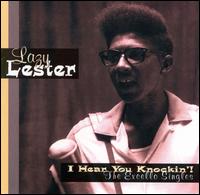
Lazy Lester - I Hear You Knocking - 1994.


Review:

Southern Louisiana swamp blues doesn't get more infectious or atmospheric than in the hands of Lazy Lester, whose late-'50s/early-'60s catalog for Excello Records (produced by the legendary J.D. Miller) is splendidly summarized with the 30 sides here. Lester's insistent harp and laconic vocals shine brightly on the rollicking "I'm a Lover, Not a Fighter," "Sugar Coated Love," "I Hear You Knockin'," and "If You Think I've Lost You," serving to help define the genre's timeless appeal.

Password and Link:
mississippimoan
mp3 192 kbps - 100 Mb
http://www.filefactory.com/file/b3572da/n/llihyk_rar